

Getting a dental implant can feel like the finish line after months of planning and healing. Once it feels solid and looks natural, it’s easy to assume the work is done.
But your daily habits still play a big role in whether that implant lasts for decades or runs into trouble early.
Dental implant failure is uncommon, but it’s not impossible, and most cases trace back to everyday choices rather than the implant itself.
Small habits around brushing, smoking, chewing, and dental visits can quietly affect the gum tissue, jawbone, and hardware that keep your implant secure.
Understanding these habits gives you a real chance to catch problems before they turn into bigger repairs.
This guide walks through the five habits worth watching, why they matter biologically or mechanically, and what warning signs you should call your dentist.
Key Takeaways
- Plaque buildup, tobacco use, and excess bite force are the most common everyday threats to implant stability.
- Catching gum inflammation or bone loss early often means simpler treatment and a better long-term outcome.
- Regular dental checkups and a steady home care routine protect both the implant crown and the bone underneath it.
Table of Content
- How Everyday Habits Put Implants at Risk
- Skipping Daily Cleaning Around the Gumline
- Smoking, Vaping, and Other Nicotine Use
- Putting Too Much Force on Your Restoration
- Missing Checkups and Early Warning Signs
- Small Daily Choices Help Implants Last
- Frequently Asked Questions
How Everyday Habits Put Implants at Risk
A dental implant depends on two things staying healthy: the living tissue around it and the mechanical parts that make up the restoration.
When either one is neglected, implant failure becomes more likely, even years after the initial procedure.
The jawbone and gums support the implant much like they support a natural tooth root. If bone loss or gum disease sets in, the foundation weakens.
If too much force hits the prosthetic teeth or implant crown, the visible parts can crack or loosen instead.
Why Healthy Gums and Jawbone Matter
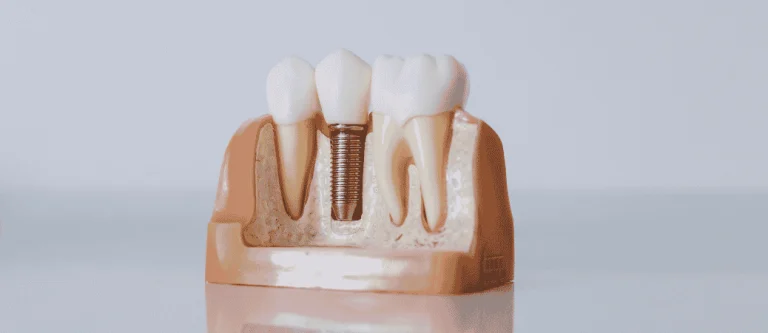
Healthy gum tissue and a strong jawbone hold the implant in place through a process called osseointegration, where the titanium post fuses directly with bone.
This fusion is what makes implants feel stable enough to bite and chew normally. When gum disease or bone loss disrupts that connection, the implant can loosen even if the crown on top looks fine.
Biological vs. Mechanical Causes of Implant Failure
Biological failure involves the tissues around the implant, usually gum inflammation or bone loss tied to infection like peri-implantitis.
Mechanical failure involves the physical parts, such as a cracked implant crown or a loosened screw from grinding or biting hard objects.
Both can lead to implant failure, but they call for different fixes, so it helps to know which one you’re dealing with.
When Osseointegration and Implant Support Are Most Vulnerable
Osseointegration is most fragile in the months right after placement, but the bone and gum support around a finished implant can still weaken years later.
Smoking, untreated gum disease, and skipped dental checkups all chip away at that support over time.
Staying alert during both the healing period and the years after gives your implant the best long-term footing.
Skipping Daily Cleaning Around the Gumline
Neglecting oral hygiene around your implant is one of the fastest ways to invite trouble.
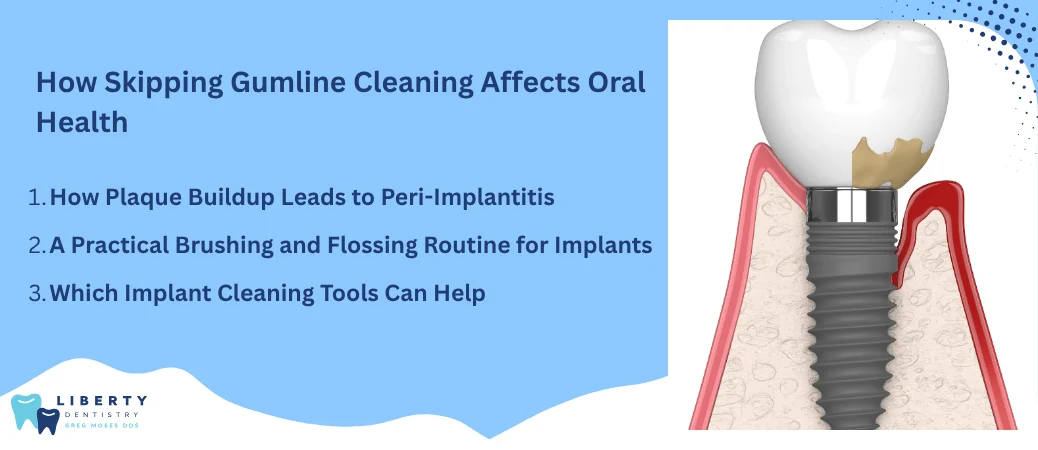
Bacterial plaque collects along the gumline, hardens into calculus if left alone, and irritates the tissue that holds your implant in place.
Plaque buildup near an implant crown behaves a lot like plaque on a natural tooth, but the stakes are different because there’s no enamel layer to buffer early damage to the gum.
Left unchecked, this can quietly progress toward serious infection.
How Plaque Buildup Leads to Peri-Implantitis
Peri-implantitis is a gum infection that specifically targets the tissue and bone around a dental implant, and it’s considered the leading cause of implant failure.
Oral bacteria feed on trapped plaque, causing gum inflammation that can spread to the bone if it isn’t treated.
Because implants don’t have natural nerve sensitivity, early stages can be painless, which is part of why routine care and checkups matter so much.
A Practical Brushing and Flossing Routine for Implants
Brush twice a day with a soft-bristled toothbrush and non-abrasive toothpaste, angling the bristles gently toward the gumline where the implant crown meets the gum tissue.
Floss once daily, working the floss carefully around the base of the crown rather than snapping it in and out.
If you’re unsure about your technique, these flossing tips straight from the dentist can help you refine your routine.
Consistency matters more than perfection here. A quick, thorough two minutes twice a day beats an occasional deep clean.
Which Implant Cleaning Tools Can Help
A water flosser can reach spots that traditional floss misses, especially under a bridge or around multiple implant crowns, using a gentle stream of pressure to rinse away debris. Interdental brushes work well for wider gaps between teeth or implants.
If you’re new to implant care, the team at Liberty Dentistry can recommend tools suited to your specific restoration during a routine visit.
Smoking, Vaping, and Other Nicotine Use
Smoking and vaping both raise your risk of dental implant failure by interfering with healing and blood flow.
This holds true whether you’re recovering from surgery or have had your implant for years.
Nicotine affects the body’s ability to deliver oxygen and nutrients to healing tissue, which is exactly what the gum and bone around an implant need to stay strong.
Why Tobacco Use Can Delay Healing
Tobacco use slows healing by narrowing blood vessels and reducing the oxygen that reaches gum tissue.
Research shows smokers experience implant failure rates two to three times higher than nonsmokers according to research on smoking and implant outcomes.
Slower healing after placement also raises the chance the implant never fully integrates with the jawbone.
How Nicotine Affects Blood Flow and the Immune System
Nicotine constricts blood vessels and weakens the immune system’s ability to fight off infection near the implant site.
This combination makes it harder for the body to catch and control early gum inflammation before it turns into peri-implantitis.
Vaping introduces similar risks, since nicotine exposure from vaping can also affect healing even without traditional smoke.
Reducing Tobacco-Related Implant Risks
Cutting back on tobacco and nicotine use, even gradually, improves blood flow and immune response around your implant.
Many oral surgeons recommend quitting at least one week before surgery and two months afterward, since quitting during this window meaningfully lowers failure risk.
If quitting feels difficult, ask your dentist about support options. There’s no judgment here, just a shared goal of protecting your investment.
Putting Too Much Force on Your Restoration
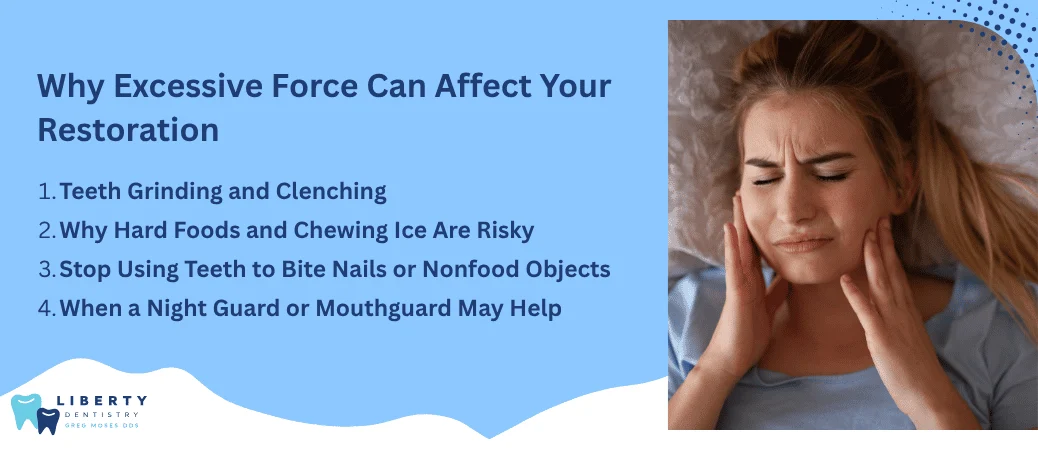
Excess bite force from grinding, hard foods, or nervous habits can crack an implant crown or loosen its connection to the bone.
Unlike gum disease, this type of damage is mechanical rather than infection-driven, though both can eventually lead to implant failure if ignored.
Teeth Grinding and Clenching
Bruxism puts repeated, forceful pressure on implant crowns that were never designed to absorb constant grinding.
Over time, this can chip porcelain, loosen the crown, or stress the bone-implant connection itself. Grinding often happens during sleep, so many people don’t realize they’re doing it until a dentist spots the wear.
Why Hard Foods and Chewing Ice Are Risky
Chewing ice or hard foods puts sudden, sharp force on implant crowns that can crack porcelain or loosen the restoration.
Cutting hard foods into smaller pieces reduces pressure on the implant with each bite. Save the ice for your drink, not your teeth.
Stop Using Teeth to Bite Nails or Nonfood Objects
Nail biting and chewing on pens or other inedible objects apply repeated, uneven pressure that implants aren’t built to handle.
These habits are easy to fall into without noticing, especially during stressful moments. Swapping in a stress ball or fidget tool can help break the pattern.
When a Night Guard or Mouthguard May Help
A custom night guard cushions your implant crown from the force of nighttime grinding and clenching. If you play sports, a mouthguard offers similar protection against sudden impact.
Ask your dentist whether a night guard fits your specific bite alignment and grinding pattern.
Missing Checkups and Early Warning Signs
Skipping dental checkups lets small problems around your implant grow into bigger ones before you notice anything is wrong.
Regular visits let your dentist catch gum inflammation, bone loss, or early peri-implantitis while treatment is still simple.
What Your Dentist Checks During Implant Maintenance
Your dentist checks gum tissue for swelling or bleeding, measures pocket depth around the implant, and may take an X-ray to look for bone loss near the base.
These checks happen alongside a professional cleaning that removes plaque buildup your toothbrush and floss can’t reach.
Routine visits like these are covered in more detail during regular dental checkups at Liberty Dentistry.
Symptoms That Need a Prompt Dental Visit
Persistent gum redness, bleeding when you brush, a loose-feeling crown, or discomfort while chewing all warrant a call to your dentist.
These symptoms don’t automatically mean your implant has failed, but catching them early makes treatment far more manageable. Waiting it out rarely helps and can let inflammation reach the bone.
Why Professional Cleaning Helps Protect Bone Support
Professional cleaning removes hardened plaque and calculus that home brushing can’t fully clear, especially around the base of the implant crown.
This directly protects the bone underneath, since untreated buildup is what allows peri-implantitis to take hold.
Pairing home care with dental exams and cleanings gives your implant the best odds of long-term stability.
Small Daily Choices Help Implants Last

Dental implants are a durable solution for tooth loss, but their success still depends on the choices you make every day.
Brushing carefully around the gumline, limiting tobacco use, protecting your bite from excess force, and keeping up with dental checkups all work together to protect your investment.
None of these habits require dramatic lifestyle changes. Small, steady adjustments make the biggest difference in implant care over time.
If you notice swelling, looseness, or discomfort around your implant, don’t wait for your next scheduled visit.
The team at Liberty Dentistry can evaluate your implant and guide you toward the right next step, whether that’s a simple cleaning or a closer look at your tooth replacement.
Frequently Asked Questions
What is the number one reason dental implants fail?
Peri-implantitis, a gum infection that affects the tissue and bone around an implant, is widely considered the leading cause of dental implant failure.
It develops from untreated plaque buildup along the gumline. Regular cleaning and dental checkups are the best way to prevent it.
What are the early symptoms of dental implant failure?
Early signs include gum redness or swelling, bleeding when you brush, a loose or shifting implant crown, and discomfort while chewing.
These symptoms don’t always mean the implant has failed, but they signal a need for prompt evaluation. Catching them early usually means simpler treatment.
Can a dental implant fail years after placement?
Yes, implants can develop problems years after placement, usually due to gum disease, smoking, or ongoing bite stress rather than the original surgery.
Peri-implantitis in particular can develop slowly over time. That’s why ongoing checkups matter even for implants that have felt fine for years.
How can I keep my dental implants from failing?
Brush and floss carefully around the implant, avoid tobacco and vaping products, protect your bite with a night guard if you grind your teeth, and keep up with regular dental checkups.
These habits address both the gum and bone support and the physical crown itself. Consistency matters more than any single habit on its own.
Does smoking or vaping increase the risk of implant failure?
Yes, both smoking and vaping introduce nicotine that narrows blood vessels and slows healing around the implant site.
Studies show smokers face implant failure rates two to three times higher than nonsmokers. Cutting back or quitting improves blood flow and immune response around the implant.
Can teeth grinding damage a dental implant?
Yes, teeth grinding, or bruxism, puts repeated pressure on implant crowns that can lead to cracking, loosening, or stress on the bone connection.
A custom night guard helps absorb that pressure during sleep. Talk to your dentist if you notice jaw soreness or visible wear on your teeth.