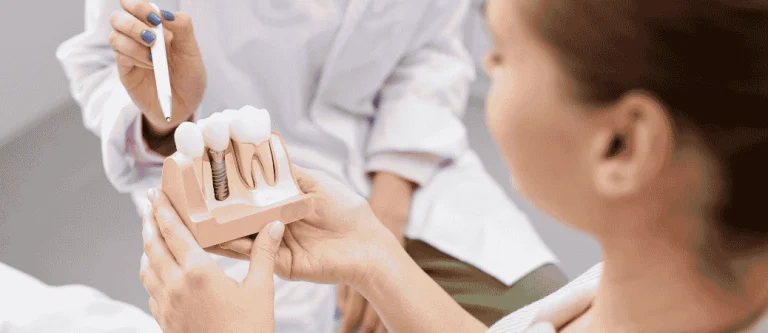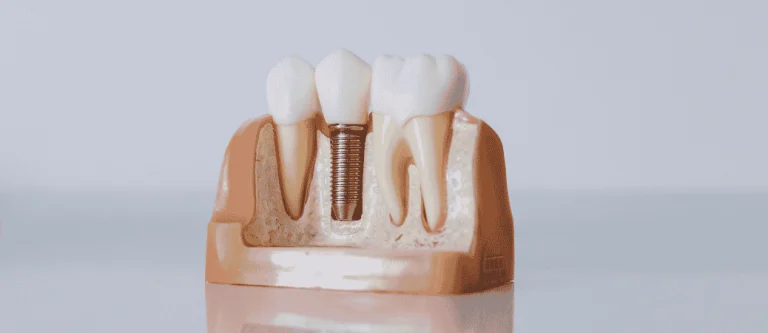


A new smile in one visit sounds appealing, and for some patients it is a real option.
Same day dental implant candidates typically need healthy gums, adequate jawbone support, and enough implant stability to receive a temporary tooth on surgery day.
Same-day dental implants can work well if you have healthy gums, solid jawbone density, and realistic expectations about what that first tooth actually is.
For the right candidate, this approach shortens the time spent without a visible tooth and cuts down on appointments.
For someone with bone loss, active gum disease, or a heavy grinding habit, it can raise the risk of problems before the implant even has a chance to heal.
This article walks through nine questions worth asking before you commit to a same-day timeline, from bone health to total cost, so you can have a clear-eyed conversation at your next dental implant consultation.
Key Takeaways
- A temporary tooth placed on surgery day is not the same as a finished, permanent restoration, since healing still takes months.
- Your candidacy depends on bone density, gum health, and habits like smoking or teeth grinding, not just your preference for speed.
- Weighing cost, risk, and recovery restrictions against a staged approach helps you choose the timeline that actually fits your life.
What Does “Same-Day” Actually Promise?
Same-day dental implants promise a temporary tooth on the day of surgery, not a completed, permanent restoration.
The implant post still needs weeks to months to fuse with your jawbone through a process called osseointegration before it’s ready for a final crown.
This approach goes by a few names: “teeth in a day,” immediate load implants, or one-day implants. All of them describe the same basic idea.
Your dentist places the implant post, checks that it’s stable enough to support a tooth right away, and attaches a temporary crown or bridge before you leave.
Will I Get a Permanent Tooth That Day?
If your implant is stable enough, you may receive a temporary crown or bridge that restores your smile while the implant heals.
However, you will still need to avoid putting too much chewing pressure on the temporary restoration until your dentist confirms it is safe.
The bone around the implant needs time to heal and bond with the titanium post, a process that typically takes several months before your dentist places the permanent crown.
Think of the temporary tooth as a placeholder with a job to do. It protects the healing implant and lets you function normally while the real work happens underneath, out of sight.
Can an Implant Be Placed the Same Day as an Extraction?
Yes, in some cases, but this is a separate decision from immediate loading. Placing an implant into a fresh extraction socket on the day a tooth comes out is one choice your dentist makes.
Whether to attach a temporary tooth to that implant right away is another.
A patient can have an implant placed the same day as an extraction and still need to wait before getting any visible tooth, if the bone or stability isn’t ideal for immediate loading.
Your dental implants consultation should cover both questions separately, not treat them as one package deal.
Can Your Mouth Support Immediate Loading?
Immediate loading depends on whether your jawbone, gums, and bite can hold a temporary tooth steady while healing happens underneath.
Dentists check bone density, gum condition, and how tightly the implant sits in the bone before deciding if same-day loading makes sense for you.
A low-risk approach to implant treatment traditionally keeps implants load-free for three to eight months to let osseointegration finish without added stress, according to a Cochrane systematic review of randomized trials.
Same-day loading skips that waiting period for the temporary tooth, which is why your specific anatomy carries more weight in this decision.
Do I Have Enough Healthy Jawbone?
Bone volume and density are the biggest factors in whether same-day loading is realistic.
If you’ve lost bone from years of missing teeth or gum disease, your implant may not have enough solid structure to grip tightly enough for immediate function.
Our guide to dental implants after years of missing teeth explains how bone loss can affect your treatment options and why a staged approach may sometimes be necessary.
When bone is thin, a bone graft or sinus lift can rebuild the area, but these procedures need their own healing time before an implant goes in. That usually rules out a same-day timeline for that visit.
Ask directly whether bone grafting is likely in your case, since it changes the whole plan.
Could My Gums or Health History Affect Eligibility?
Yes. Active gum disease, uncontrolled diabetes, and smoking all raise the risk of implant failure or slow healing.
Gum disease introduces bacteria near the surgical site, and smoking reduces blood flow, both of which can interfere with the bone fusing properly around the implant.
In case of gum diseases, periodontal treatment can help address the condition before implant placement is considered.
Teeth grinding, known as bruxism, is another factor worth mentioning at your consultation. The extra force from grinding can stress a temporary tooth before it’s ready to handle that kind of pressure.
How Will My Dentist Check Implant Stability?
Your dentist measures how firmly the implant sits in the bone right after placing it, often using a torque value from the surgical instrument.
A 3D imaging scan, known as a CBCT scan, taken beforehand helps your implant dentist map out bone volume and plan the exact placement angle.
Research on immediate loading has pointed to a high insertion torque, roughly 35 Ncm or more, as one condition tied to successful outcomes, per the same Cochrane review.
If your implant doesn’t reach that kind of stability during surgery, your dentist may recommend waiting before attaching any tooth.
What Happens During Treatment and Healing?
Treatment starts with imaging and a consultation, moves through surgery and a temporary tooth, then continues with months of quiet healing before the final crown goes on.
Knowing what each phase actually involves helps you set expectations for appointment length, discomfort, and what you can and can’t eat along the way.
What Will Happen Before, During, and After Surgery?
Your dentist starts with X-rays or 3D imaging, reviews your medical history, and builds a treatment plan suited to your mouth.
On surgery day, the implant goes into the jawbone under local anesthesia or sedation, and if stability allows, a temporary crown gets attached before you leave the dental office.
Afterward, expect some swelling and soreness for a few days, which is common after oral surgery.
Osseointegration continues quietly for months while you wear the temporary tooth and attend follow-up visits so your dentist can check healing progress.
What Can I Eat and Do While the Implant Heals?
Stick to soft foods and avoid biting directly on the temporary tooth with hard or chewy items.
Things like steak, raw vegetables, nuts, and sticky candy put too much pressure on a temporary crown that hasn’t fully bonded to the bone yet.
Gentle brushing and flossing around the area, plus keeping up with checkups, protect the implant during this stretch. Most patients ease back into normal eating gradually as healing milestones pass, not all at once.
How Do the Trade-Offs Affect Your Decision?
Same-day implants can shorten the time patients spend without visible teeth, but immediate loading requires careful patient selection.
Traditional dental implants spread treatment over several months with a staged approach, which gives the bone uninterrupted time to fuse before it bears any chewing force.
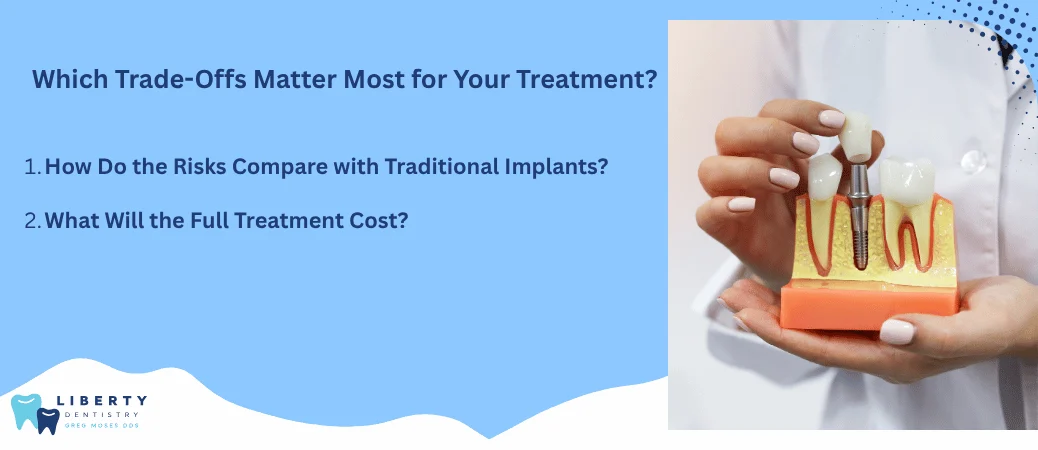
How Do the Risks Compare with Traditional Implants?
Current evidence shows the two approaches land close together on failure rates, with one meaningful difference worth noting.
The Cochrane review found no convincing difference in implant failure, prosthesis failure, or marginal bone loss between immediate and conventionally loaded implants, though it rated the evidence quality as very low due to bias in the underlying studies.
That same review did find a small reduction in bone loss favoring immediate loading, about 0.10 mm less on average, though the authors note this difference may not be clinically meaningful.
What matters more for your decision is that success in either approach depends heavily on patient selection and surgical stability, not the timeline itself.
Understanding the causes of dental implant failure can also help you recognize how gum health, smoking, teeth grinding, and other risk factors may affect long-term results.
What Will the Full Treatment Cost?
Dental implant costs depend on the number of implants, bone health, imaging needs, and the type of restoration. Ask for an itemized treatment estimate so you understand what is included before starting.
Liberty Dentistry also offers financing options through Cherry and CareCredit, which may help eligible patients manage treatment costs through payment plans.
Request a written breakdown covering the implant, abutment, crown, imaging, and any bone grafting separately, plus whether follow-up visits are included in that quote.
Choosing the Implant Timeline That Fits Your Needs
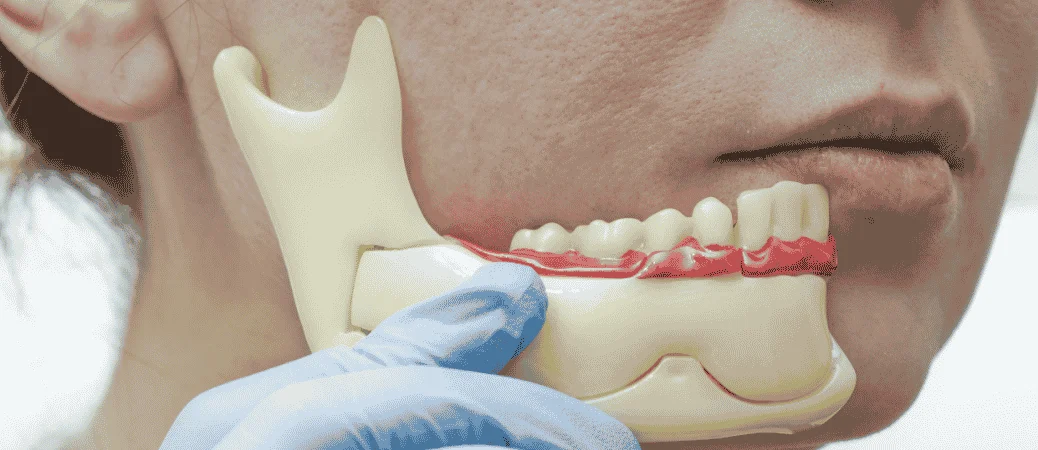
Your best timeline depends on your bone health, your tolerance for recovery restrictions, and how much you value fewer appointments over a more cautious, staged approach.
Someone with strong jawbone density and healthy gums might move comfortably through a same-day plan.
Someone recovering from years of missing teeth or needing a bone graft first may do better with a traditional, staged timeline instead.
At Liberty Dentistry, Dr. Greg Moses helps patients explore dental implant options based on their oral health rather than the promise of faster treatment.
With 3D imaging, an evaluation of gum health, and a review of bite patterns, the dental team can help determine whether immediate loading or a staged approach is more appropriate.
If you’re weighing a single tooth against a full-arch option, that evaluation also shapes which restoration type fits your case.
Bring your questions about bone, gum health, recovery, and cost to that first appointment. The answers will tell you which timeline actually suits your mouth, not just your schedule.
Frequently Asked Questions
Can I eat normally with same-day dental implants?
Not right away. You’ll need a soft-food diet for weeks while the implant heals, avoiding hard, crunchy, or sticky foods that put pressure on the temporary tooth.
Most patients return to a fuller diet gradually as healing progresses and their dentist clears them for it.
How many days should I rest after implant surgery?
Plan for a few days of taking it easy, with swelling and soreness often peaking in the first 48 to 72 hours.
Many patients return to desk work or light routines within two to three days, though full healing of the bone takes months, not days.
What is the leading reason a same-day implant fails?
Movement of the implant during early healing is the main culprit, often linked to insufficient bone density, infection, or excess force from grinding or hard foods.
Insertion torque at the time of surgery plays a role too; implants placed with lower stability face a higher chance of failing to integrate.
Are same-day implants more painful than traditional implants?
Some patients report slightly more swelling or soreness after same-day treatment, partly because the appointment combines surgery and crown placement into one longer visit.
Pain levels vary by person, and both approaches involve a similar surgical step for placing the implant itself.
What should I know before agreeing to same-day implants?
Confirm your bone density, gum health, and implant stability are solid enough to support immediate loading, and ask for a written, itemized cost estimate.
Understand that the tooth you leave with that day is temporary, with the permanent crown following only after osseointegration is complete.