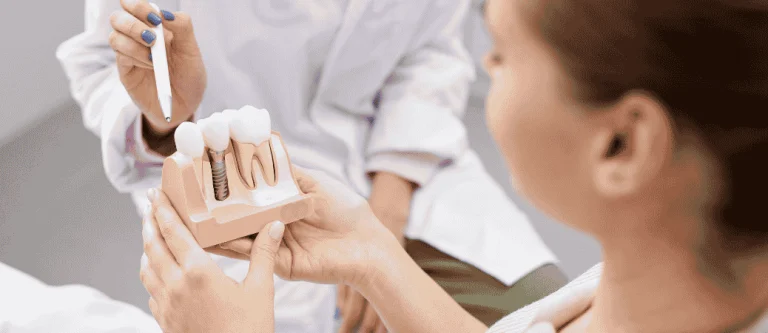


Maybe you had a tooth extraction five years ago. Or fifteen. You told yourself you’d deal with it later, and later never came.
The good news is that you can still get dental implants after years of missing teeth, even if it’s been a decade or more since you lost the tooth.
The main question isn’t how long you waited. It’s how much healthy jawbone you have left to support the implant.
That’s where things get interesting. Your jaw starts to shrink once a tooth root is gone, and long-term tooth loss can lead to bone resorption that makes placement trickier.
But tricky isn’t the same as impossible, and treatments like bone grafting have made tooth replacement possible for many people who assumed they’d missed their chance. Here’s what to expect.
Key Takeaways
- Your bone health and gum condition matter far more than how many years have passed.
- Bone grafting can rebuild lost jaw support, though it adds several months to your timeline.
- Good daily care and regular checkups help your implant last for decades.
Table of Content
- What Determines Whether Implants Are Still an Option
- How Years Without Teeth Change Your Mouth
- Preparing the Jaw for Implant Placement
- The Dental Implant Process After Long-Term Tooth Loss
- Choosing the Right Replacement Option for Your Needs
- Protecting Your Investment for Long-Term Success
- Frequently Asked Questions
What Determines Whether Implants Are Still an Option
The number of years since you lost a tooth matters less than the condition of your jaw, gums, and general health today. Your dentist looks at how much bone you have left, whether your gums are healthy, and how well your body heals.
Why Time Since Tooth Loss Is Not the Only Factor
Bone loss starts quickly after a tooth comes out. Most of the shrinking happens in the first year, and it slows down after that.
So someone missing a tooth for 15 years may not have much less bone than someone missing one for five years. What matters is where you stand right now.
Many people who lost a tooth years ago are still candidates because bone grafting can rebuild what was lost. In rare cases, too much bone is gone for a graft to help, and then other options make more sense.
Bone, Gum, and Overall Health Requirements
Here is what your dental team checks before saying yes:
| What They Check | Why It Matters |
| Jawbone density and height | The implant needs solid bone to hold it steady |
| Gum health | Active gum disease can cause an implant to fail |
| General health | Conditions like diabetes affect healing |
| Oral hygiene habits | Daily brushing and flossing protect the implant |
| Smoking | Smoking raises the risk of failure |
You need enough jawbone to support the implants plus healthy gum tissue. If you have signs of periodontal disease, your dentist may send you to a periodontist first.
Uncontrolled diabetes and osteoporosis do not rule you out, but they do need to be managed. Talk with your doctor and your implant dentist together.
How an Implant Specialist Assesses Eligibility
Your first visit usually includes an exam, X-rays, and a 3D scan. A CT scan often gives the clearest answer about whether you have enough bone.
The oral surgeon measures bone width and height at each site. That tells them if you can get an implant right away or need a graft or sinus lift first.
They also review your medications and medical history. Bone density measurements, gum assessment, and imaging shape your treatment plan and timeline.
How Years Without Teeth Change Your Mouth
When a tooth is gone for a long time, your jawbone slowly shrinks, nearby teeth drift out of place, and your bite starts to feel different.
These changes also affect how you chew, how you speak, and how the lower part of your face looks.
Bone Resorption and Jawbone Shrinkage
Your jawbone stays strong because tooth roots push against it every time you chew. Once a root is gone, that pressure disappears and your body starts breaking down the bone it no longer uses. This is called bone resorption.
Bone loss starts fast and most of the shrinkage happens within the first few years after the tooth comes out.
A few things speed up jawbone shrinkage:
- Gum disease that damages the tissue holding teeth in place
- Long-term denture wear, since dentures rest on the gums and don’t stimulate bone
- Infection or injury at the extraction site
- Natural changes in bone density as you get older
Gum recession often follows, leaving a thinner ridge of bone and tissue. That’s why your dentist will check your bone and gum health before planning an implant.
Shifting Teeth and Changes in Bite Alignment
Teeth don’t like empty space. Over months and years, the teeth beside a gap tilt toward it, and the tooth above or below can drift down or up into the opening.
This drifting changes your bite alignment. Your upper and lower teeth stop meeting evenly, so some teeth take more pressure than they were built to handle.
Uneven pressure can lead to:
- Cracked or worn enamel on overworked teeth
- New gaps where food gets trapped
- Jaw joint soreness or clicking
- Deeper gum pockets around tilted teeth
Shifted teeth also narrow the space where an implant would go. Sometimes you’ll need restorative dentistry treatments or reshaping first so the replacement tooth fits correctly.
Effects on Chewing, Speaking, and Facial Appearance
Missing back teeth make chewing harder, so many people start avoiding steak, raw vegetables, and other tougher foods. That can quietly limit your diet.
Front gaps can change speech. Sounds like s, f, and th need teeth to shape the airflow, so words may whistle or slur a bit.
Your face changes too. As the jaw ridge shrinks, the area around your mouth can look sunken, your lips may seem thinner, and lines around the corners of your mouth get deeper.
Dentures also loosen over time because there’s less bone left to hold them. If yours has started slipping, that’s a common reason people look into implants years later.
Preparing the Jaw for Implant Placement
When teeth have been gone for years, the jawbone underneath usually shrinks, so your dentist may need to rebuild that area before placing an implant.
The prep work starts with detailed scans and can include grafting, sinus surgery, or implant designs made for thin bone.
Digital Imaging and Treatment Planning
Your first step is almost always imaging. Regular x-rays give a flat view, which isn’t enough to plan surgery.
Most oral surgeons now use a CBCT scan (cone beam CT scan). It creates a 3D picture of your jaw in under a minute.
That scan shows three things your dentist needs to know:
- How much bone height and width you have left
- Your jawbone density in the exact spot where the implant will go
- Where your nerves and sinus cavities sit
At Liberty Dentistry, 3D imaging and precision planning help our team decide ahead of time whether you need grafting and which implant size fits best. That planning lowers the chance of surprises during surgery.
Bone Grafting and Guided Bone Regeneration
A bone graft adds material to the thin area so your body can build new bone around it. The graft can come from a donor, an animal source, a synthetic material, or another spot in your own mouth.
Guided bone regeneration takes it a step further. Your surgeon places a thin barrier membrane over the graft, which keeps gum tissue from growing into the space and gives bone cells room to fill in.
Healing takes time. A dental bone graft needs at least three months before an implant can go in, and larger grafts can take longer.
Some patients wait 6 to 9 months for the graft to heal before implant placement, depending on how much bone was rebuilt.
When a Sinus Lift or Ridge Augmentation May Help
Two areas cause trouble most often: the upper back jaw and narrow ridges.
Sinus lift. Your sinuses sit right above your upper molars. After those teeth are gone, the sinus floor can drop and leave only a few millimeters of bone.
A sinus lift gently raises the sinus membrane and packs graft material underneath.
Ridge augmentation. If your jaw is tall enough but too narrow, your surgeon widens it. One version splits the ridge slightly and fills the gap with graft material to encourage new bone growth.
Both are common, planned procedures. Bone grafting before implant placement is often what makes long-term success possible when the bone has thinned out.
Alternatives for Severe Bone Loss
Not everyone needs months of grafting. If your bone loss is significant, ask about these options:
| Option | How it helps |
| Short or angled implants | Fit into shallower bone and avoid nerves or sinuses |
| Mini implants | Narrower posts that need less bone width |
| Zygomatic implants | Anchor into the cheekbone instead of the upper jaw |
| Implant-supported dentures | Use fewer implants to hold a full arch |
Newer implant designs mean zygomatic implants and shorter posts can work where standard implants once couldn’t.
If you’ve been told implants aren’t possible for you, a second opinion is worth it. Many clinics now offer several paths forward for patients with bone loss, including combinations of grafting and specialty implants.
The Dental Implant Process After Long-Term Tooth Loss
Getting dental implants years after extraction usually takes several appointments spread over months, starting with imaging and ending with your final crown.
Along the way, your jawbone needs time to heal and bond with the implant post so your new tooth stays put.
From Consultation to Implant Surgery
Your first visit is all about information gathering. Your dentist or oral surgeon takes X-rays and a 3D scan to measure how much bone you have left, then checks your gums for signs of disease or infection.
They’ll also review your medical history, since conditions like diabetes and habits like smoking can slow healing.
If your bone is too thin, you’ll likely need a graft first. Healing from a bone graft can take six to nine months before the implant can go in.
The implant placement surgery itself is shorter than most people expect, usually about one to two hours per implant. Your surgeon opens the gum, creates a small channel in the bone, and places the titanium implant post.
You’re numb the whole time, and sedation is available if you’re nervous.
Dr. Greg Moses, an experienced dentist at Liberty Dentistry, can walk you through the process and explain whether grafting, implant placement, or another tooth replacement option fits your case.
Healing and Osseointegration
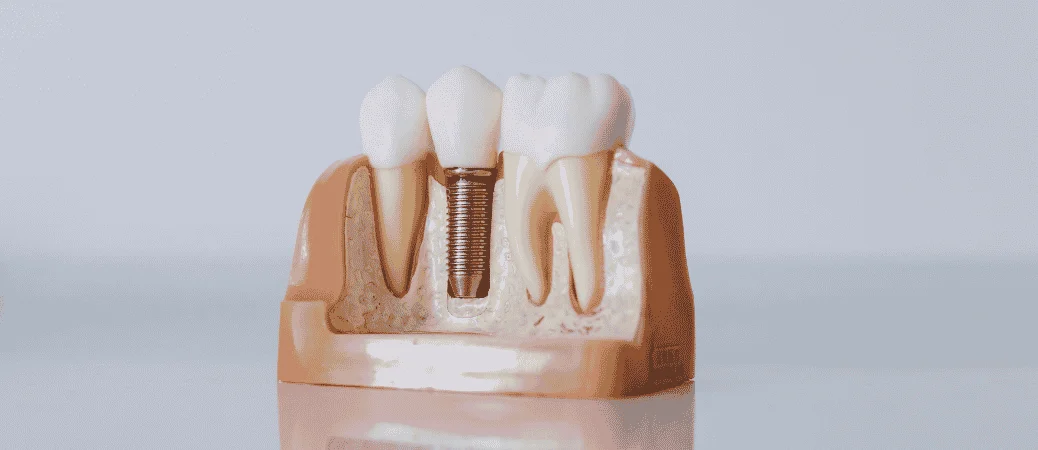
After surgery, your body starts a process called osseointegration. New bone cells grow directly onto the surface of the titanium post, locking it in place like a natural tooth root.
This takes roughly three to six months, depending on your bone quality and where the implant sits.
Soreness and swelling usually fade within a few days. Ice packs, prescribed medication, and soft foods help a lot during that first week.
A few things protect your implant stability while you heal:
- Skip smoking entirely as it is one of the biggest risk factors for implant failure
- Keep the area clean with gentle brushing and saltwater rinses
- Avoid hard or crunchy foods that press on the site
- Show up for every follow-up so your dentist can confirm the bond is forming
You won’t walk around with a gap, either. Most offices give you a temporary tooth so you can talk and eat normally.
Adding the Abutment and Final Restoration
Once your dentist confirms the implant has fused with your bone, you come in for the abutment. That’s the small connector piece that screws into the implant post and sticks slightly above the gumline.
Sometimes this happens in a single short visit. Your gums then need a week or two to heal around it.
Next come impressions or a digital scan of your bite. A lab uses those to build your dental restoration, a crown, bridge, or denture that matches the shape and shade of your other teeth.
The final crown is typically attached about two to three weeks after the abutment. From there, your replacement teeth work and look much like the ones you lost.
How Delayed Placement Compares With Immediate Placement
Immediate implant placement happens right after a tooth is pulled, while the socket is still open. Delayed implant placement is what you’re dealing with when the tooth has been gone for years.
The main difference is preparation, not possibility.
| Immediate placement | Delayed placement | |
| Timing | Same day as extraction | Months or years later |
| Bone available | Usually intact | Often reduced |
| Grafting needed | Sometimes | More common |
| Total timeline | 3–6 months | 9–15 months with a graft |
Waiting does mean more steps and more cost. But dental implants after years of tooth loss still have strong success rates when your gums are healthy and there’s enough bone to work with.
Modern tools help close the gap, too. Shorter and narrower implants, sinus lifts, and angled placement techniques let dentists work around areas where bone has thinned out.
Choosing the Right Replacement Option for Your Needs
The best fix for a long-standing gap depends on how many teeth are missing, how much jawbone you have left, and what you want to spend.
Some people do well with a single implant, while others get better results from an implant-supported bridge, an implant-retained denture, or a non-surgical option.
Single Implants for One Missing Tooth
If you’re missing one tooth, a single implant replaces just that tooth without touching the teeth next to it. Your dentist places a titanium post in the jaw, lets it fuse with the bone for a few months, then adds an abutment and a crown on top.
The big advantage is that healthy neighboring teeth stay untouched. A bridge, by contrast, requires filing down the two teeth beside the gap.
Single implants also stimulate the jawbone, which helps slow the bone loss that follows years of missing a tooth.
Implant-Supported Bridges for Multiple Missing Teeth
When you’ve lost two, three, or four teeth in a row, you usually don’t need an implant for every gap.
An implant-supported bridge uses two implants as anchors, with false teeth suspended between them. Fewer implants means less surgery, less bone grafting, and a lower total bill.
This option works well if you have enough bone at each end of the gap but thinner bone in the middle. Your surgeon plans implant spots based on a 3D scan.
Keep in mind:
- Cleaning takes extra effort, as you’ll need floss threaders or a water flosser to reach under the bridge
- The bridge is fixed, so you can’t take it out
- Chewing power is much closer to natural teeth than with a removable partial denture
Implant-Retained Dentures and Full-Arch Solutions
Missing most or all of your teeth on one jaw? Implant-retained dentures may be a better fit than a full arch of individual implants.
Also called snap-in dentures or overdentures, these use two to four implants per jaw with snaps or a bar that hold the denture in place. No adhesive needed.
Full-arch options like All-on-4 use four to six implants to support a fixed bridge that stays in your mouth permanently.
If years of bone loss have left your lower jaw thin and your denture keeps slipping, this is often the option your dentist will bring up first.
How Implants Compare With Bridges and Removable Dentures
Implants aren’t the only path, and they’re not right for everyone. Here’s how the main tooth replacement options stack up:
| Option | Typical lifespan | Bone loss protection | Surgery needed |
| Dental implant | 20+ years, often longer | Yes | Yes |
| Traditional dental bridge | 10–15 years | No | No |
| Partial denture | 5–10 years | No | No |
| Full dentures | 5–10 years with refits | No | No |
Traditional dentures and bridges cost less upfront and can be done in weeks instead of months.
The tradeoff is that they sit on top of your gums or lean on other teeth, so the jawbone underneath keeps shrinking. That’s why dentures need refitting every few years.
Bring your budget, your timeline, and your daily habits to your consultation. Your dentist can tell you which of these your bone and gums will actually support.
Protecting Your Investment for Long-Term Success
Implants can last for decades, but only if you take care of them the same way you would care for natural teeth. Cleaning, regular checkups, and managing health conditions all play a part in keeping the implant stable.
Daily Care for Implants and Surrounding Gums

Implants can’t get cavities, but the gum and bone around them can still get infected. That’s why daily oral hygiene matters so much.
Brush twice a day with a soft-bristled brush. Pay extra attention to the gum line where the crown meets your gums, since that’s where plaque likes to build up.
Clean between your teeth once a day. A few tools work well here:
- Floss made for implants, which has a spongy middle section
- Interdental brushes that fit into tight spaces
- A water flosser for areas that are hard to reach
- Antibacterial mouth rinse, if your dentist suggests it
Skipping these steps can lead to swollen, bleeding gums. Good habits protect both your gum health and the bone holding the implant in place.
Follow-Up Visits and Monitoring Implant Health
Plan on seeing your dentist every six months, or more often if you have a history of gum disease.
At these visits, your dentist checks the implant for looseness, measures the gum pockets around it, and looks for early signs of infection. X-rays show whether the bone level around the implant is holding steady.
Your bite gets checked too. If your bite is uneven, the implant takes on more pressure than it should during chewing, which can loosen the crown or damage the post over time.
Hygienists use special tools that won’t scratch the implant surface. Regular cleanings remove hardened plaque you can’t reach at home, which helps you get the most out of your long-term investment in your oral health.
Reducing Risks That Can Lead to Implant Failure
Most implants succeed, but a few things raise the odds of trouble.
Smoking is the biggest one. It slows healing and reduces blood flow to your gums, which makes infection more likely.
Untreated periodontal disease is another risk, since the same bacteria that damage natural teeth can attack the tissue around an implant. Getting gum disease treated before implant placement gives you a stronger starting point.
Your general health matters as well:
| Condition | Why It Matters |
| Uncontrolled diabetes | Slows healing and raises infection risk |
| Osteoporosis | Can affect bone density around the implant |
| Teeth grinding | Puts extra force on the implant and crown |
Talk with your doctor about keeping blood sugar steady. If you grind your teeth at night, a night guard protects the implant from constant pressure. Avoid chewing ice or hard candy, which can crack the crown.
Frequently Asked Questions
Waiting years to replace a tooth changes your jaw, but it rarely closes the door on implants. Below are answers about bone loss, health conditions that cause problems, real cost ranges, and what to do if implants are not the right fit for you.
Is it too late to get dental implants after missing teeth for many years?
In most cases, no. Many people get implants years or even decades after tooth loss, as long as their gums are healthy and there is enough bone to support the post.
Your dentist will take a 3D scan to measure how much bone you have left. That scan, not the calendar, decides your next step.
You may need a few extra steps first, like treating gum disease or rebuilding bone. Those steps add months to your timeline, but they do not rule you out.
Can I get dental implants if I have bone loss in my jaw?
Usually yes. Bone loss starts fast, about 25% of the bone shrinks in the first three months after a tooth comes out, and it keeps thinning slowly after that.
The fix is often a bone graft. Grafting rebuilds support using your own bone, donor bone, or a synthetic material, then you wait three to six months for it to heal.
For upper back teeth, your surgeon may suggest a sinus lift. This raises the sinus floor slightly and adds bone underneath so the implant has room.
What could disqualify me from getting dental implants?
Very few things rule you out permanently. Most issues are ones you can treat or manage first.
Common concerns include:
- Active gum disease needs treatment before surgery
- Uncontrolled diabetes, such as high blood sugar slows healing
- Smoking raises the risk of implant failure, so many surgeons ask you to stop for several weeks before and after
- Certain medications and high-dose IV bone drugs and some cancer treatments affect jaw healing
- Past radiation to the head or neck, thus this needs a careful review
- A jaw that is still growing, and most teens wait until growth stops
Be honest about your full health history at your consultation. Your dentist can plan around most of these once they know about them.
How much do dental implants cost when bone grafting is needed?
A single implant with the post, abutment, and crown usually runs $3,000 to $6,000. Bone grafting is a separate charge on top of that. A small graft placed at the same time as an extraction costs the least.
Larger grafts, sinus lifts, and block grafts cost more because they need extra surgical time and materials. Ask for a written treatment plan that lists each step and its fee.
Are zygomatic implants an option for severe upper-jaw bone loss?
They can be. Zygomatic implants are longer posts that anchor in your cheekbone instead of your upper jaw, which is helpful when the jawbone is too thin for standard implants.
The main benefit is skipping large grafts, so treatment often moves faster. Many patients receive a temporary set of teeth within days.
This is a more advanced surgery, so it belongs with an oral and maxillofacial surgeon who does it regularly. Ask how many cases the surgeon has handled and what the follow-up plan looks like.
What are the most affordable ways to replace teeth if implants are not suitable?
A removable partial denture is usually the lowest-cost choice for one or a few missing teeth. A full denture works when a whole arch is gone.
A fixed bridge sits in the middle on price. It looks and feels more stable, but the teeth on both sides of the gap have to be shaped down to hold it.
If you want more stability than a denture but fewer implants, ask about an implant-supported overdenture. Two implants in the lower jaw can hold a snap-in denture for far less than replacing each tooth.
Dental schools and community clinics often charge less for the same treatments. Many private offices also offer monthly payment plans or outside financing.