

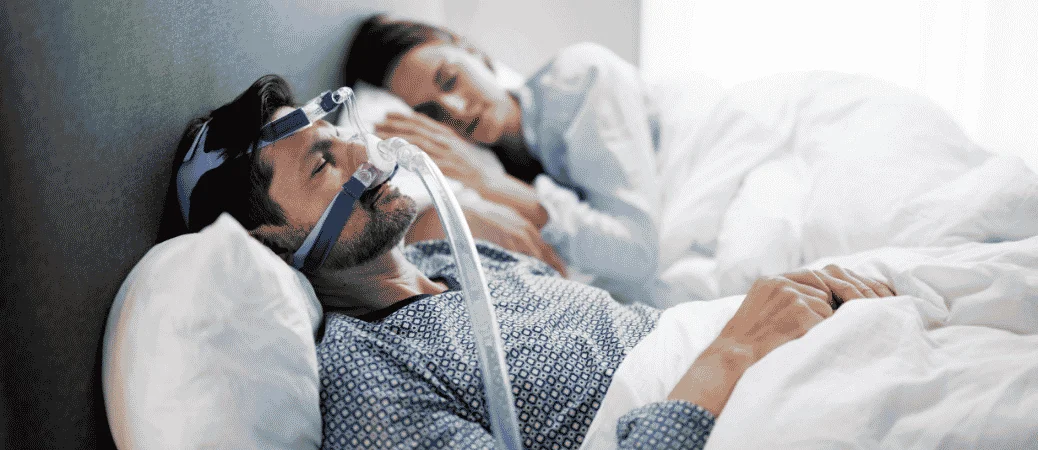
If you live in Liberty, NC and struggle with sleep apnea, you may feel stuck with a CPAP machine you do not want to use.
Many people with obstructive sleep apnea (OSA) stop using CPAP because it feels uncomfortable or hard to manage.
You have other options, and local providers can help you explore them.
You can get sleep apnea treatment in and around Liberty, NC through local sleep clinics, ENT offices, and dental providers who offer CPAP alternatives like oral appliance therapy and other non-CPAP treatments.
Sleep studies, medical exams, and custom treatment plans are available close to home, so you do not have to travel far to get help.
You deserve a treatment you can use every night. When you understand your CPAP alternatives and where to find them locally, you can take control of your sleep and your health.
Key Takeaways
- You can find local providers near Liberty, NC who treat sleep apnea without CPAP.
- Oral appliances and other CPAP alternatives offer effective options for many people with OSA.
- Local sleep studies and medical evaluations help you choose the right treatment for your needs.
Explore sleep apnea treatment Liberty NC options without CPAP
Table of Content
- Sleep Apnea Diagnosis and Local Resources
- Non-CPAP Treatment Options Available Locally
- How Oral Appliance Therapy Works With Local Sleep Apnea Dentists
- Other Medical and Lifestyle Approaches
- Understanding PAP Alternatives and Equipment Choices
- Frequently Asked Questions
Sleep Apnea Diagnosis and Local Resources
You need a clear diagnosis before you choose treatment that does not use CPAP. In Liberty, NC, you can spot common signs, complete a sleep study, and connect with trained sleep specialists close to home.
Recognizing Sleep Apnea Symptoms
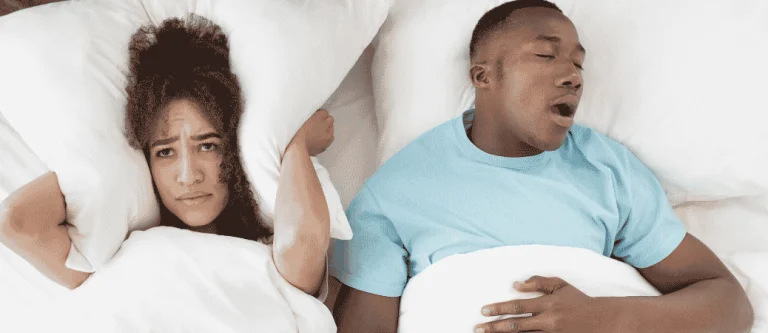
You may notice loud snoring, choking, or gasping during sleep. A bed partner often sees these signs first.
Other sleep apnea symptoms include:
- Daytime sleepiness
- Morning headaches
- Dry mouth when you wake up
- Trouble focusing
- Mood changes
These signs point to sleep-disordered breathing, where your airway narrows or closes during sleep. Your brain wakes you up just enough to breathe again, even if you do not remember it.
If you feel tired after a full night in bed, do not ignore it. Untreated sleep apnea can raise your risk for high blood pressure, heart problems, and drowsy driving.
A proper diagnosis helps you choose safe and effective treatment options.
Getting a Sleep Study in Liberty, NC
A sleep study confirms if you have sleep apnea and shows how severe it is. You usually have two testing options: an in-lab test or a home sleep test.
An in-lab study, called polysomnography, tracks your breathing, oxygen levels, heart rate, and brain activity overnight.
If you prefer to sleep at home, ask about an FDA-approved home sleep test. These tests measure breathing and oxygen while you use a small device at night.
Your primary care provider can refer you, or you can contact a sleep clinic directly to ask about testing.
Finding Sleep Specialists and Clinics Nearby
After your test, a sleep specialist reviews the results and explains your options. Look for board-certified sleep specialists who treat sleep-disordered breathing on a regular basis.
If you want care at a larger medical center, some regional health systems offer full sleep programs.
When you call a clinic, ask:
- Are your sleep specialists board-certified?
- Do you offer home sleep tests?
- What non-CPAP treatments do you provide?
Clear answers help you move forward with confidence and choose care that fits your needs.
Schedule a consultation for sleep apnea treatment in Liberty, NC.
Non-CPAP Treatment Options Available Locally
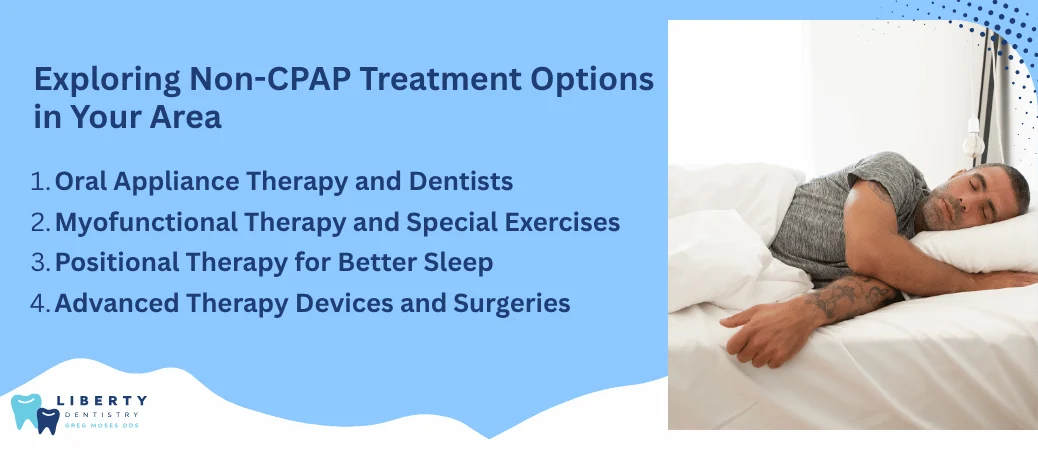
You have several non‑CPAP choices in and around Liberty, NC. Local dentists, sleep specialists, and ENT surgeons offer treatments that range from simple mouth devices to surgery for airway support.
Oral Appliance Therapy and Dentists
You can work with a trained dentist to get oral appliance therapy for mild to moderate obstructive sleep apnea. This option uses a small device that fits in your mouth while you sleep.
Most providers recommend a custom oral appliance, often called a mandibular advancement device (MAD). A MAD moves your lower jaw forward to keep your airway open.
Dentists take digital scans or molds of your teeth to create a custom‑fitted oral appliance that fits your bite.
Some patients use a tongue‑retaining device (TRD). A TRD holds your tongue forward instead of moving your jaw. Many people prefer a MAD because it feels more natural.
Myofunctional Therapy and Special Exercises
You can also strengthen the muscles in your mouth and throat through myofunctional therapy, also called orofacial myofunctional therapy.
This therapy focuses on your tongue, lips, cheeks, and soft palate.
A trained therapist teaches you daily exercises. These exercises train your tongue to rest against the roof of your mouth and improve muscle tone.
Stronger muscles can reduce airway collapse during sleep.
Sessions often last 30 to 45 minutes. You practice at home for several months.
Positional Therapy for Better Sleep
Your sleeping position can affect how often your airway closes. Many people have more breathing events when they sleep on their back.
Positional therapy trains you to stay on your side. You can use a wearable device that vibrates when you roll onto your back.
Some people use special belts or shirts with padding to prevent back sleeping.
Side sleeping keeps your tongue and soft tissues from falling backward. This can lower apnea events in people with position‑dependent sleep apnea.
Advanced Therapy Devices and Surgeries
If you have moderate to severe sleep apnea and cannot tolerate CPAP, you may consider advanced treatments. Local ENT surgeons and sleep centers can evaluate your airway and explain surgical options.
One option is Inspire therapy, also known as hypoglossal nerve stimulation. A surgeon implants a small device in your chest.
It sends a signal to the nerve that controls your tongue, which keeps your airway open during sleep.
Other procedures include:
- Uvulopalatopharyngoplasty (UPPP) to remove or reshape tissue in your throat
- Turbinate reduction or septoplasty to improve nasal airflow
- Maxillomandibular advancement, which moves your upper and lower jaws forward
Contact our Liberty, NC team to ask about non-CPAP sleep apnea options.
How Oral Appliance Therapy Works With Local Sleep Apnea Dentists
You can treat sleep apnea in Liberty, NC without a CPAP by working with a trained sleep apnea dentist. They use a custom oral appliance to keep your airway open while you sleep and coordinate care with your sleep doctor.
![[Liberty Dentistry] Tooth Extractions - NPG Magazine + Gift Card](https://libertydentistrysmiles.com/wp-content/uploads/Liberty-Dentistry-Tooth-Extractions-NPG-Magazine-Gift-Card.webp)
Benefits and Effectiveness
Oral appliance therapy (OAT) uses a custom-fitted oral appliance that looks like a small mouthguard. You wear it only at night.
Most devices are a mandibular advancement device (MAD). This type of oral appliance gently moves your lower jaw forward to prevent your airway from collapsing.
By keeping the airway open, the device reduces snoring and breathing pauses. Many patients choose this option because it is small, quiet, and easy to travel with.
A custom oral appliance is made from digital scans or impressions of your teeth. Your dentist adjusts it over time to find the best position for comfort and airflow.
The oral appliance therapy for sleep apnea offered by trained dental sleep medicine providers is FDA-cleared and used in coordination with physicians.
It works well for many people with mild to moderate obstructive sleep apnea and for some who cannot tolerate CPAP.
Choosing a Dental Sleep Medicine Provider
You should look for a dentist with training in dental sleep medicine, not just general dentistry.
A sleep apnea dentist understands how jaw position affects breathing and how to adjust a mandibular advancement device safely.
Treatment usually starts after a sleep study ordered by your physician. Your dentist and doctor work together to confirm your diagnosis and track your progress.
When choosing a provider in or near Liberty, check that they offer custom-fitted oral appliances rather than over-the-counter mouthguards. Custom devices fit better, last longer, and allow precise adjustments.
Other Medical and Lifestyle Approaches
You have options beyond machines and surgery. Targeted breathing work, better airway care, and steady weight control can lower symptoms and support more restful sleep.
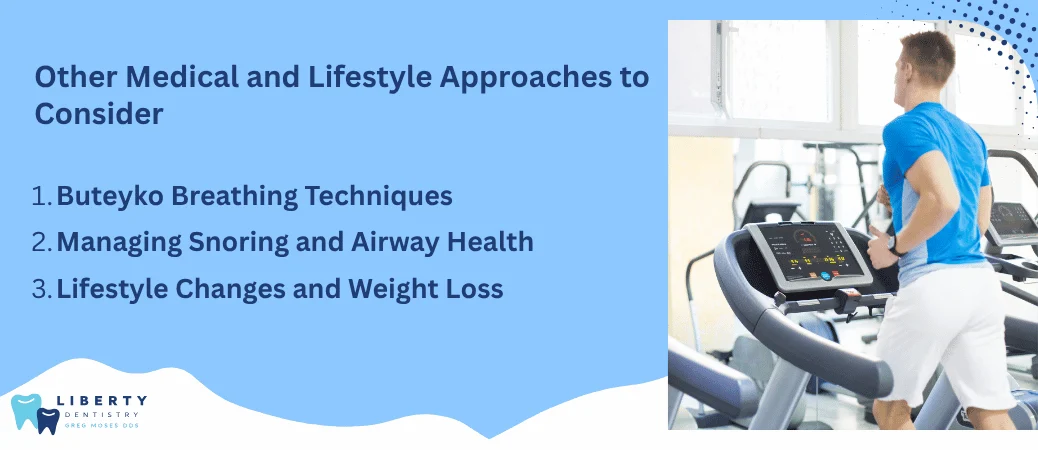
Buteyko Breathing Techniques
Buteyko breathing trains you to breathe slowly through your nose instead of your mouth. You practice small, quiet breaths and short breath holds to improve carbon dioxide balance and reduce overbreathing.
You can do simple drills at home:
- Sit upright and breathe through your nose.
- Take a small inhale, then a slow, gentle exhale.
- Pause briefly before the next breath.
- Keep your chest still and let your diaphragm do the work.
Many people with sleep apnea also deal with snoring and mouth breathing. Nasal breathing may reduce airway collapse and dry mouth at night.
Buteyko will not cure moderate or severe sleep apnea. Still, it may help you manage loud snoring, anxiety around breathing, and poor sleep quality.
Ask a trained therapist or a local sleep clinic in Liberty, NC if they offer guided instruction.
Managing Snoring and Airway Health
Snoring happens when soft tissues in your throat vibrate as air moves past them. If you have loud snoring, gasping, or choking at night, you need a sleep study to rule out obstructive sleep apnea.
Simple steps can improve airway health:
- Treat nasal congestion with saline rinses or prescribed sprays.
- Address allergies that swell your nasal passages.
- Avoid alcohol before bed, since it relaxes throat muscles.
- Sleep on your side to reduce airway collapse.
If your snoring ties to mild apnea, a dental device may help.
You should also ask your provider to check for enlarged tonsils, a deviated septum, or jaw alignment issues. Treating these problems can improve airflow and support more consistent, restful sleep.
Lifestyle Changes and Weight Loss
Excess weight increases fat deposits around your neck and tongue. This narrows your airway and raises your risk of obstruction at night.
Even a modest weight loss can reduce the number of breathing pauses you have. Doctors often recommend:
- Daily walking or strength training
- Cutting back on sugary drinks and processed foods
- Keeping a steady sleep schedule
In some cases, your doctor may discuss prescription weight loss drugs like Zepbound if you meet medical criteria. Medication works best when you combine it with diet and exercise.
Lifestyle changes rarely replace medical treatment for moderate or severe apnea.
But when you commit to steady weight control and better habits, you give your airway more space and improve your chances of deeper, more restful sleep.
Understanding PAP Alternatives and Equipment Choices
You do not have to choose between a standard CPAP machine and no treatment at all. Several PAP therapies adjust pressure in different ways to improve comfort and fit your breathing pattern.
BiPAP, APAP, and EPAP Explained
Not all pap therapy works the same way. Different machines change how and when they deliver air pressure.
BiPAP (bilevel positive airway pressure) uses two pressure settings. It gives you higher pressure when you inhale and lower pressure when you exhale.
Many people choose bipap if they feel like they are pushing against air with standard cpap machines. Doctors may also suggest it if you have higher pressure needs.
APAP (auto-adjusting positive airway pressure) changes pressure throughout the night. The machine tracks your breathing and adjusts in real time.
EPAP devices work differently. They use small nasal valves that create pressure when you exhale. They do not use a large machine, which appeals to people who want a simpler setup.
When to Consider PAP Over Non-PAP Options
You might still benefit from pap therapies even if you want to avoid a traditional CPAP mask. These devices remain one of the most effective treatments for moderate to severe obstructive sleep apnea.
Doctors often suggest PAP if you have:
- Frequent breathing pauses each hour
- Low oxygen levels during sleep
- Daytime sleepiness that affects driving or work
- Heart or blood pressure problems linked to apnea
Lifestyle changes, oral appliances, and surgery can help some people. However, medical groups note that PAP therapy remains the standard treatment in many cases.
If you struggle with one machine type, ask your provider in Liberty about adjusting pressure settings or switching to bilevel positive airway pressure or auto-adjusting positive airway pressure before giving up on treatment.
Frequently Asked Questions
You have several ways to treat sleep apnea in and around Liberty, NC without using a CPAP machine. Local providers offer sleep studies, oral appliances, and other therapies that may fit your needs and comfort level.
What non-CPAP options are available for treating sleep apnea near Liberty, NC?
You can explore several options if you cannot tolerate CPAP. These include oral appliances, positional therapy, weight loss, surgery, and nerve stimulation devices.
Many providers discuss alternatives such as mandibular advancement devices and Inspire therapy. Some treatments work best for mild to moderate obstructive sleep apnea.
Your doctor may also suggest lifestyle changes. Losing weight, avoiding alcohol at night, and sleeping on your side can reduce airway blockage for some people.
Where can I schedule a sleep study close to Liberty, NC, including nearby areas like Fayetteville or Fort Bragg?
You can schedule an in-lab sleep study at regional medical centers near Liberty.
Some centers offer home sleep tests. You take the device home and return it the next day for review.
Are there dentists or clinics nearby that can fit an oral appliance for sleep apnea?
Yes, you can work with trained dental providers who fit custom oral appliances. These devices move your lower jaw forward to keep your airway open during sleep.
A custom appliance usually requires several visits. The dentist takes impressions, fits the device, and adjusts it over time.
How do I know if I’m a good candidate for an oral sleep apnea device instead of CPAP?
You may qualify if you have mild to moderate obstructive sleep apnea and cannot tolerate CPAP. A sleep study confirms the severity of your condition.
Your doctor will review your airway, jaw structure, and overall health. People with severe sleep apnea often respond better to CPAP, but some still explore other options if CPAP does not work for them.
You also need healthy teeth and gums. The device relies on your teeth for support.
What should I expect during a sleep study at a local sleep center?
During an in-lab study, you spend the night in a private room. A technician places small sensors on your scalp, chest, and legs to monitor breathing, oxygen levels, heart rate, and brain activity.
The test does not hurt. You sleep as you normally would while the system records data.
If you complete a home sleep test, you wear a smaller device. You return it the next day so a sleep specialist can review the results.
Do I need a referral to see a sleep specialist near Liberty, NC, and how soon can I get an appointment?
Some clinics require a referral from your primary care provider, especially if your insurance plan demands it. Other centers allow you to schedule directly.
Wait times vary by location. In many cases, you can get a consultation within a few weeks, while sleep studies may schedule a few weeks after that.
Call the clinic and ask about referral rules and appointment availability. This step helps you plan your care without delay.