



A bright smile matters to a lot of people. When you look into cosmetic dentistry, you often find two options at the top of the list: veneers vs teeth whitening.
If you want results that last the longest, veneers usually win, since they can last 10 to 15 years while whitening fades within months to a couple of years.
But the best choice for you depends on more than just how long it lasts.
Your teeth and your goals are unique to you. Whitening works well if you just want a brighter smile without a big change.
Veneers make sense if you want a full smile transformation that fixes color, shape, and other issues at the same time. Keep reading to see how each option holds up over time and which one may fit your needs.
Key Takeaways
- Veneers tend to hold their look much longer than whitening treatments.
- Your choice depends on the type of stains you have and what you want your smile to look like.
- Talking with your cosmetic dentist helps you pick the option that fits your budget and goals.
Table of Content
- The Quick Answer: Which Option Lasts Longer?
- How Each Treatment Changes Your Smile
- Choosing by Stain Type and Smile Concern
- Durability, Maintenance, and Everyday Care
- Cost, Trade-Offs, and Treatment Commitment
- Making a Confident Choice With Your Cosmetic Dentist
- Frequently Asked Questions
The Quick Answer: Which Option Lasts Longer?
If you want the short version, porcelain veneers last longer than teeth whitening. But your best choice still depends on your teeth, your budget, and what kind of results you’re after.
When Whitening Is the Better Long-Term Starting Point
If your teeth are healthy and you just want a brighter smile, whitening is a smart place to start. It’s affordable, quick, and low-risk since it doesn’t change your natural tooth structure.
You can expect whitening results to last anywhere from a few months to a couple of years. This depends on your diet, your habits, and how often you touch up your treatment.
If you drink coffee, tea, or red wine often, your results will fade faster. But if you’re just testing the waters before committing to something bigger, whitening gives you a low-cost way to see how a brighter smile feels.
It’s also a good option if you’re not ready for a permanent change yet.
When Veneers Offer Better Lasting Value
If you want results that stick around for years without much upkeep, veneers are the stronger choice. Porcelain veneers typically last 10 to 15 years, and sometimes longer with good care.
Part of what makes them last is their stain resistance. Unlike your natural enamel, porcelain doesn’t absorb color from food and drinks the same way.
This gives you better color stability over time, so your smile stays consistent year after year.
Veneers also let you fix more than just color. If you have chips, gaps, or uneven teeth, veneers can handle all of it at once. This makes them a good fit if you’re looking for a full smile transformation rather than just a brighter shade.
A Side-by-Side Comparison of Results
When you put teeth whitening vs veneers side by side, the differences become clear. Here’s a simple breakdown:
| Factor | Teeth Whitening | Porcelain Veneers |
| Average lifespan | A few months to 2 years | 10–15 years or more |
| Stain resistance | Low; prone to new staining | High; resists most stains |
| What it fixes | Color only | Color, shape, gaps, chips |
| Upfront cost | Lower | Higher |
| Maintenance | Frequent touch-ups | Minimal upkeep |
If you want fast, affordable brightening, whitening does the job. If you want a longer-lasting, more complete change to your smile, veneers are worth the investment.

How Each Treatment Changes Your Smile
Whitening and veneers work in completely different ways to brighten your smile. One treatment lifts stains from your existing teeth, while the other covers your teeth with a new surface.
How Professional Teeth Whitening Works
Professional teeth whitening uses a bleaching gel to break down stains on your tooth enamel. Most whitening gels contain hydrogen peroxide or carbamide peroxide, which work below the surface to lighten discoloration.
You have two main options for this treatment. In-office whitening gives you fast results in about an hour, since your dentist uses a stronger gel under controlled conditions.
Take-home whitening kits use a gentler gel in custom trays that you wear for a set amount of time each day over one to two weeks.
Both methods target surface stains caused by coffee, tea, wine, and other foods. Your natural tooth structure stays untouched, since whitening only changes the color of your enamel, not its shape.
How Dental Veneers Work
Dental veneers change your smile by covering your teeth with a new, custom-made surface. Your dentist can use porcelain or composite resin veneers, depending on your budget and goals.
Before your veneers are placed, your dentist will complete tooth preparation. This step usually involves a small amount of enamel removal, so the veneer sits flush against your tooth and looks natural.
Once bonded in place, veneers can adjust the color, shape, size, and even spacing of your teeth. This gives you control over more than just brightness, which is something whitening cannot do on its own.
What Whitening Cannot Change
Whitening only works on certain types of stains, so it has some clear limits. It cannot fix intrinsic discoloration, which is staining that comes from inside the tooth rather than the surface.
Whitening also cannot change the shape, size, or alignment of your teeth. If you have chips, gaps, or uneven edges, whitening will not correct these issues.
Your results depend on your enamel’s natural response to the gel, so some people see less dramatic changes than others.
For gaps, cracks, or uneven tooth shape, veneers remain the more reliable option since they can reshape your smile in ways whitening simply cannot.
Choosing by Stain Type and Smile Concern
The best treatment for your smile depends on why your teeth look discolored or uneven in the first place.
Some problems sit on the surface of your teeth, while others come from deeper inside, and this makes a big difference in what will actually work for you.
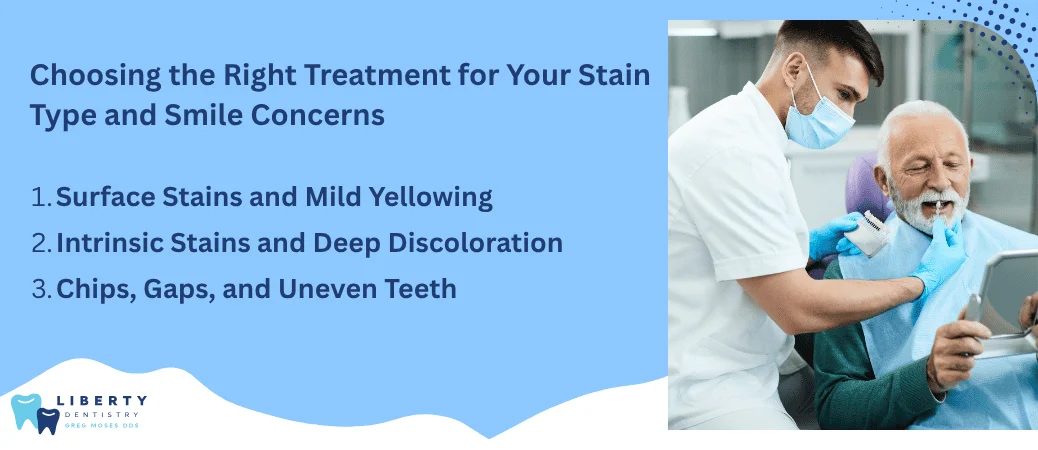
Surface Stains and Mild Yellowing
If your teeth have picked up stains from coffee, tea, wine, or smoking, you likely have what dentists call extrinsic staining. These stains sit on the outer layer of your enamel, and they respond well to teeth whitening.
Mild discoloration and general yellow teeth are usually easy to treat this way too. Whitening gel breaks apart the surface stains and lifts your natural color back up.
You don’t need to cover your teeth if the enamel underneath is healthy. Whitening is often your simplest and most affordable choice for stained teeth caused by everyday habits.
Intrinsic Stains and Deep Discoloration
Some staining comes from inside the tooth, not the surface. This is called intrinsic staining, and it often causes deep discoloration or even severe discoloration that whitening gels cannot reach.
Common causes include fluorosis, certain childhood medications, and old dental injuries.
If your discolored teeth have gray, brown, or white patches that go beneath the enamel, whitening treatments won’t fix the problem no matter how long you use them.
In these cases, veneers cover the stain completely by placing a new surface over your tooth. This gives you a consistent, even color that lasts for years, since the stain underneath simply isn’t visible anymore.
Chips, Gaps, and Uneven Teeth
Whitening only changes color. It won’t help you if you’re dealing with uneven teeth, misshapen teeth, gaps between teeth, or minor misalignment.
Veneers can reshape your teeth, close small gaps, and make crooked or worn enamel look straight and smooth again. This means you can fix several problems with one treatment instead of trying separate fixes for each concern.
If you have chips or teeth that are different sizes, veneers offer a way to correct shape and color together. This gives you a more complete result than whitening alone can provide.
Durability, Maintenance, and Everyday Care
Once you know how each treatment works, the next question is how well it holds up. Your daily habits and how well you care for your smile play a big role in how long your results last.
How Long Whitening Results Usually Last

Whitening results don’t stick around forever. In-office teeth whitening treatments typically last six months to two years, depending on your habits.
Over-the-counter whitening options, like whitening strips or drugstore whitening kits, tend to fade faster than professional treatments. This is because they use lower concentrations of bleaching agents.
What speeds up fading? A few common culprits:
- Coffee, tea, and red wine
- Smoking or tobacco use
- Dark sauces like soy sauce or tomato sauce
- Poor oral hygiene habits
If you want to stretch out your results, cutting back on staining foods and drinks helps a lot. Touch-up treatments every so often can also keep your smile bright.
Veneer Lifespan and Color Stability
Veneers are built to last much longer than whitening treatments. Porcelain veneers can last 10 to 15 years or more with good care, while composite veneers usually last a shorter amount of time and may need replacing sooner.
One big reason people choose porcelain veneers is stain resistance. The material doesn’t soak up color the way natural tooth enamel does, so your morning coffee habit won’t wreck your smile.
Color stability is another perk. Once your veneers are placed, the shade stays the same for years. You won’t have to worry about them slowly turning yellow the way whitened teeth can.
Protecting Your Investment
Good oral hygiene matters no matter which treatment you choose. Brushing twice a day, flossing, and keeping up with dental checkups helps protect your oral health and keeps stains at bay.
If you grind your teeth at night, a condition called bruxism, this can wear down veneers over time or even cause chips and cracks. Wearing a night guard can help protect both your natural teeth and any veneers you have.
Simple habits go a long way toward protecting your smile:
- Avoid biting hard objects like ice or pens
- Rinse with water after drinking dark beverages
- Use a soft-bristled toothbrush
- See your dentist for regular cleanings
Taking these steps helps you get the most out of either treatment, whether you went with whitening or invested in veneers.
Cost, Trade-Offs, and Treatment Commitment
Money matters when you’re picking a cosmetic dental treatment, but so does knowing what you’re signing up for long term.
Your choice affects your wallet, your natural tooth structure, and how much upkeep you’ll deal with down the road.
Upfront Cost Versus Repeat Whitening Costs
Teeth whitening looks cheap at first glance. But you’ll pay for it again and again since the results fade.
Here’s a quick breakdown:
- Over-the-counter kits: $20 to $100, lasting 3 to 6 months
- Professional at-home trays: $100 to $400, lasting 6 to 12 months
- In-office whitening: $300 to $1,000 per visit, lasting 1 to 3 years
Veneers cost more upfront. Composite veneers run $250 to $1,500 per tooth, while porcelain veneers cost $900 to $2,500 per tooth. That’s a bigger hit to your budget right away.
But veneers cost less over time if you do the math across a decade. You won’t need to keep paying for touch-ups every few months like you would with whitening.
The Permanence of Enamel Preparation
This is the part you really need to think about. Getting veneers means your dentist has to remove a thin layer of enamel from your teeth before bonding the shells in place.
Enamel doesn’t grow back. Once it’s gone, it’s gone for good.
This means veneers are a one-way decision. If you get them, you’ll need some type of covering on those teeth for the rest of your life, whether that’s another veneer or a different restoration.
Teeth whitening doesn’t touch your tooth structure at all. It’s fully reversible, and you can stop anytime without any lasting changes to your teeth.
Restorations and Other Important Limitations
Veneers can’t fix everything, and they come with a few other things to keep in mind.
They don’t work well over crowns or large fillings, since the surface underneath needs to be fairly even for the veneer to bond properly. If you have several crowns already, your dentist might suggest a different approach.
Tooth sensitivity can show up temporarily after your veneers are placed, especially right after your enamel is prepped. Whitening can cause sensitivity too, particularly with stronger bleaching gels.
Gum irritation is another possibility with either treatment, especially if the whitening gel touches your gums or if veneers aren’t fitted quite right.
And if you have active gum disease, you’ll need to treat that first, since neither whitening nor veneers work well on unhealthy gums.
Making a Confident Choice With Your Cosmetic Dentist
Picking the right treatment doesn’t have to feel confusing. A good dentist will walk you through your options and help you find a plan that fits your smile and your budget.

Why a Cosmetic Consultation Matters
A cosmetic consultation is the best place to start. Your dentist will look at your teeth, check your gums, and ask about your goals for your smile.
This step matters because not every option works for every person. For example, if your teeth have deep stains from medication, whitening alone might not give you the results you want.
During this visit, your dentist can also take photos or scans of your teeth. This helps create a clear picture of what your smile could look like with different treatments.
You’ll leave with a plan that’s built around your specific needs, not a one-size-fits-all approach.
Whitening First and Veneers for Selected Teeth
Many dentists suggest starting with teeth whitening before deciding on veneers. This helps you see how bright your natural teeth can get.
Once you know your new baseline shade, you can decide if you still want veneers on certain teeth. This is often the case for teeth that are chipped, uneven, or have stains that whitening can’t fix.
Some patients choose no-prep veneers for these spots since they require less change to the natural tooth. Others may need traditional veneers for a stronger fix.
This step-by-step approach helps you spend money wisely. You only get veneers where you truly need them.
Planning a Natural-Looking Smile Design
Good smile design is about balance. Your dentist will match veneer shade, shape, and size to your whitened teeth so everything blends together.
This planning stage is where a simple smile refresh can turn into a full smile redesign if needed. For some patients, this means a full smile transformation with several veneers placed at once for an even, natural look.
Your dentist may show you mock-ups or digital previews before any permanent work begins. This gives you a clear idea of the final result and lets you make small changes early.
The goal is a smile makeover that looks like it belongs to you, not a fake or overly perfect version of your teeth.
Frequently Asked Questions
Here are some quick answers to common questions about choosing between teeth whitening and veneers, plus what to expect from each option over time.
Is it better to whiten your teeth or get veneers?
It depends on what your teeth actually need. If your teeth are healthy and just look a bit yellow from coffee, tea, or age, teeth whitening is often the better starting point.
But if you have chips, gaps, or stains that go deeper than the surface, veneers give you more complete results. They can fix the shape and color of your teeth at the same time.
How long do teeth whitening results usually last?
Whitening results usually last six months to two years, depending on your habits. Drinking coffee, tea, or red wine often can make the results fade faster.
You will likely need touch-up treatments to keep your smile bright. This is something to keep in mind if you want low-maintenance results.
How long do porcelain veneers last before they need to be replaced?
Porcelain veneers typically last 10 to 15 years with good care. That’s a big difference compared to whitening, which needs regular upkeep.
Taking care of your veneers means brushing normally, avoiding biting hard objects, and seeing your dentist for regular checkups.
Which option is more cost-effective in the long run: teeth whitening or veneers?
Whitening costs less upfront, but you’ll pay for it again and again over the years. Veneers cost more at first, but they last much longer without needing repeat treatments.
If you add up the cost of whitening touch-ups over a decade, the total price gap between the two options can shrink significantly. Your choice really comes down to your budget right now versus your budget over time.
Can veneers fix stains that professional teeth whitening cannot remove?
Yes. Some stains sit inside the tooth itself, not just on the surface. These are called intrinsic stains, and they can come from things like old antibiotic use, too much fluoride as a child, or a tooth that had a root canal.
Whitening gels cannot reach these deeper stains. Veneers cover the whole tooth, so they hide the stain completely instead of trying to bleach it away.
What happens after 10 years of having veneers?
After about 10 years, your veneers may start showing wear, like small chips or slight color changes at the edges. At this point, your dentist may recommend replacing them to keep your smile looking natural.
The good news is that replacing veneers is usually a straightforward process. Your dentist will check the health of the teeth underneath before placing new ones.